

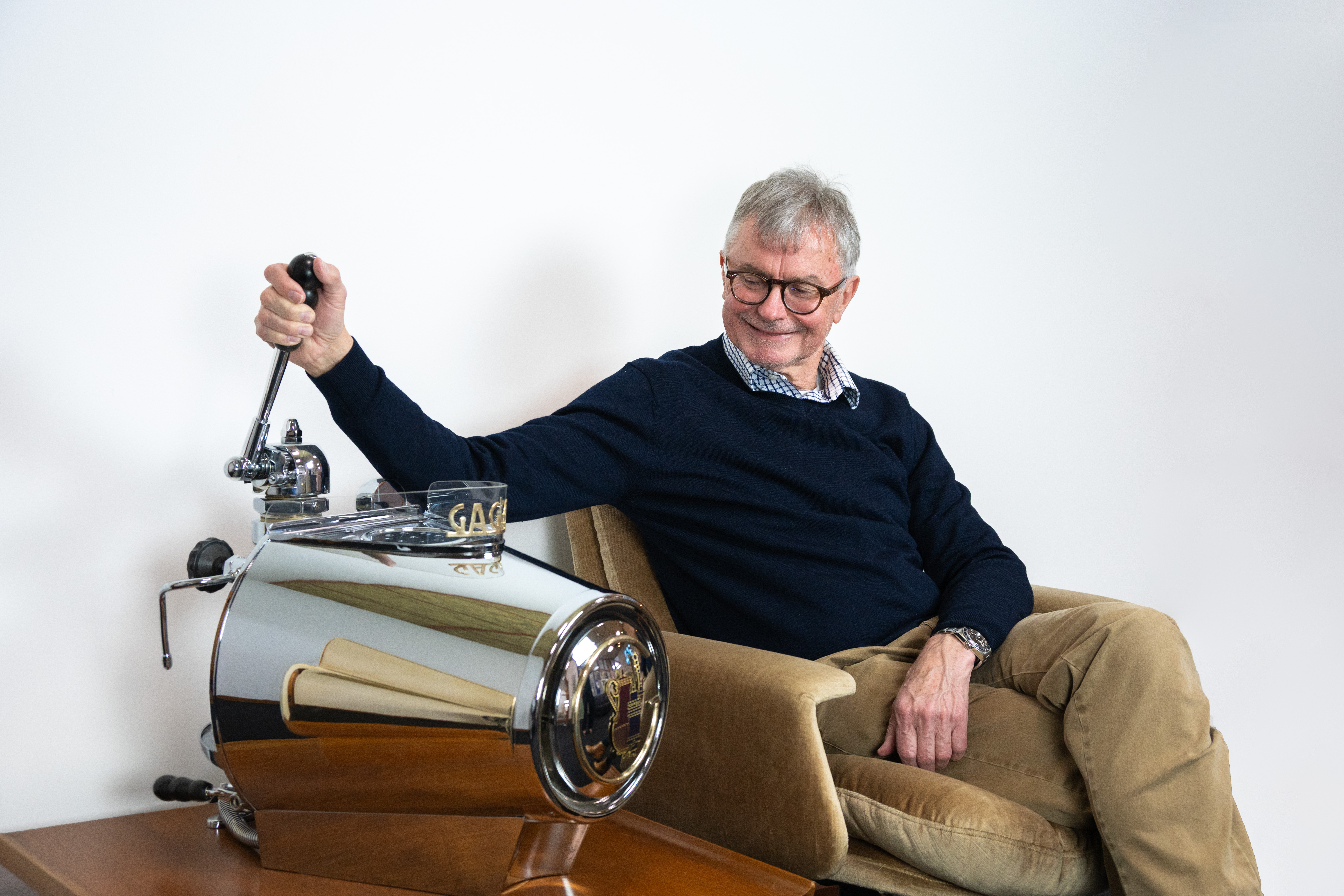
A story fit for International Coffee Day, by Cafetto Founder Christopher Short:
There are certain pieces of coffee brewing equipment that become more than the sum of their parts. Over time, they become witnesses to an industry, carrying with them the marks of the people who have used them, the environment they have worked in and the thousands of coffees they have helped produce. This is a story about a particular machine is one of those pieces.
When I was offered this rare espresso machine, unrestored, I jumped to the opportunity to own a piece of coffee history. When I decided to have it restored, the intention was never simply to bring an old machine back to working order. I wanted to preserve a piece of the industry’s legacy; to take something that represented another era of the industry and give it the care and attention it deserved.
For me, that felt particularly meaningful because when I look at this machine, I see many of the qualities that first drew me to coffee more than two decades ago.
A short trip to where it began
My relationship with coffee began in Melbourne, at a time when the city’s culture was developing into something that would ultimately be recognised around the world. What captivated me wasn’t just the coffee itself, but the incredible level of attention people were prepared to give to producing it. There was a deep appreciation for every detail – the equipment, the preparation, and the unique skill of the person trusted behind the machine.
I didn’t know at the time that this fascination would eventually become a 23-year career in the coffee industry, or that it would lead to the creation of Cafetto and the passionate team I have standing by my side today. As I look around at this global community, so much has evolved. But the one constant? The appreciation for the care that sits behind a memorable cup of coffee.
Perhaps that is why I have always been drawn to vintage coffee equipment. There is something fascinating about seeing how previous generations approached the same pursuit that continues to occupy our industry today: how to make great coffee, consistently, using the best equipment available to them.
For some time, I had been looking for something special to add to my small (but growing) collection of vintage coffee machines. I wasn’t simply looking for an old machine. I wanted something with rich history; something that would speak to people who understand and appreciate coffee equipment.
After months of searching, I found it.
The story began in December 2023 - Henk Langkemper of Espresso Service West, based just two kilometres from our European office, contacted me about a machine that had come into the hands of renowned collector and restorer Enrico Maltoni.
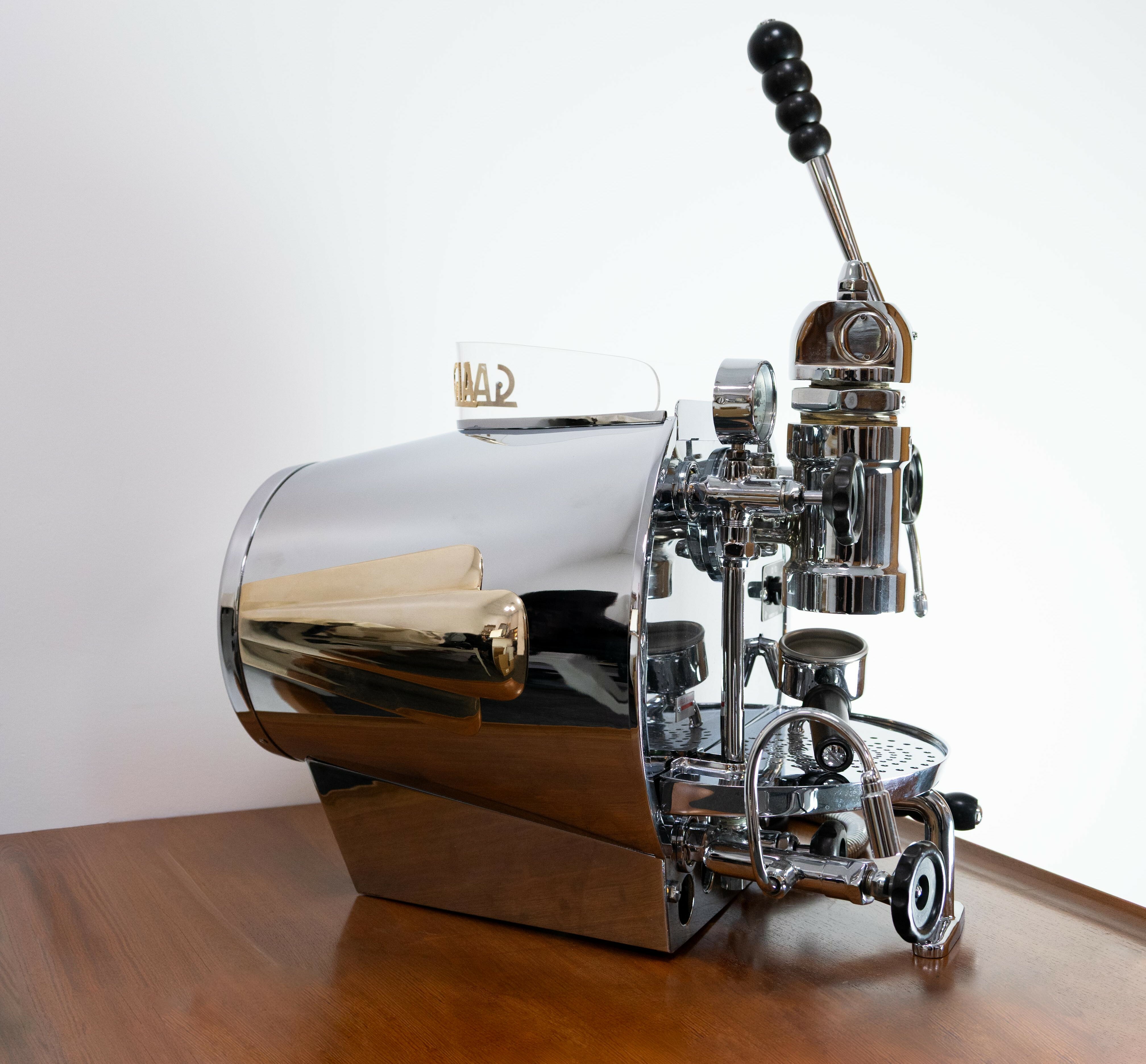
It was a 1956 Gaggia Tipo Internazionale 1 Group.
The machine immediately captured my attention. It came from an important period in the development of espresso equipment, when innovation in engineering was being matched by a design language that would go on to define an era. The One-Group Gaggia Internazionale was both technically significant and a work of art, with a timelessness that still makes it stand out almost seven decades later.
Gaggia offered the Tipo Internazionale in the one two, three, four, five & six group variations, although it seems that very few five or six group machines were made or have survived to this day. My love was for a one group version, and finding it from Henk and Enrico was a delight. This is particularly so as it is estimated that only about 30 one group Tipo Internazionale survive today.
What made this machine even more special was that it would be restored by Enrico, a passionate craftsman, whose work has helped preserve some of the industry’s most important pieces of coffee equipment. This restoration wasn’t simply about making a machine functional again. It was about respecting what it was and preserving the character from the hands of such a brilliant and reputable craftsman.
Seeing the transformation from the original machine to the finished restoration is a reminder of how much care goes into preserving something like this. Every miniscule detail matters, from the components that have been retained to the hours of work required to bring the machine back to its former condition.
What the machine represents
There is something particularly compelling about the craftsmanship of older coffee equipment. Machines like this were designed with a level of attention and engineering that speaks to the expectations of the people who built them. They were made to work hard, to be maintained, and importantly, to be respected and cared for.
Looking at the Gaggia, it is difficult to not think about the history that sits behind it. How many people stood in front of it? How many coffees passed through it? How many early mornings and busy services did it experience? How many baristas relied on it every day?
Of course, we will never know all the answers to these stories, but this is part of what makes preserving something like this so important. It gives us a tangible connection to where the industry has come from, and a reminder that coffee has always been an industry built around extraordinary care that goes beyond what meets the eye.
It also makes me think about how much the industry has changed while so much of what matters has remained the same. Technology has evolved enormously, but the fundamental values haven’t. Great coffee still depends on quality ingredients, skilled people, well-maintained equipment and an attention to detail that extends to every stage of the process.
A philosophy of Care
That belief is also the way I think about Cafetto.
After 23 years in this industry, I know that a great cup of coffee is never a result of one thing. It is the culmination of quality at every stage - from the people who grow the beans, who roast the coffee, to the barista who prepares it, and the machine that makes it possible.
Our role at Cafetto is to protect that chain. By removing cleaning as a point of compromise, we help equipment perform as its manufacturer intended, allowing the quality that has gone into the coffee to make it all the way to the cup.
That is why the restoration of this machine feels so significant to me. It is a reminder that great equipment, like great coffee, is worth caring for. When craftsmanship is met with care, it can endure for generations.
International Coffee Day
That is why International Coffee Day feels like the right moment to share the story behind this machine.
It is easy to think of coffee as simply the finished product sitting in front of us, but every cup represents an enormous amount of work, knowledge and care. It connects farmers and producers with roasters, manufacturers with engineers, and baristas with the equipment and ingredients they rely on every day.
For me, this machine is a small but tangible representation of that much bigger story. Restoring it is a way of recognising the people, craftsmanship and ingenuity that have helped shape the coffee industry into what we see before us today, while reminding us that the responsibility to care for that industry doesn’t stop with preserving its history.
It extends to the way we look after the equipment we use, the standards we set for ourselves and the commitment we make to quality at every stage.
After 23 years in the coffee industry, this is still what inspires me.
I fell in love with this industry because of the people who care deeply about getting things right, often paying attention to details that most people would never notice. That same pursuit of quality is what continues to drive me and the team behind Cafetto today, and it is ultimately what sits behind Cafetto: making sure that something as fundamental as cleaning does not become the reason great coffee, great machines, or great baristas cannot perform at their best.